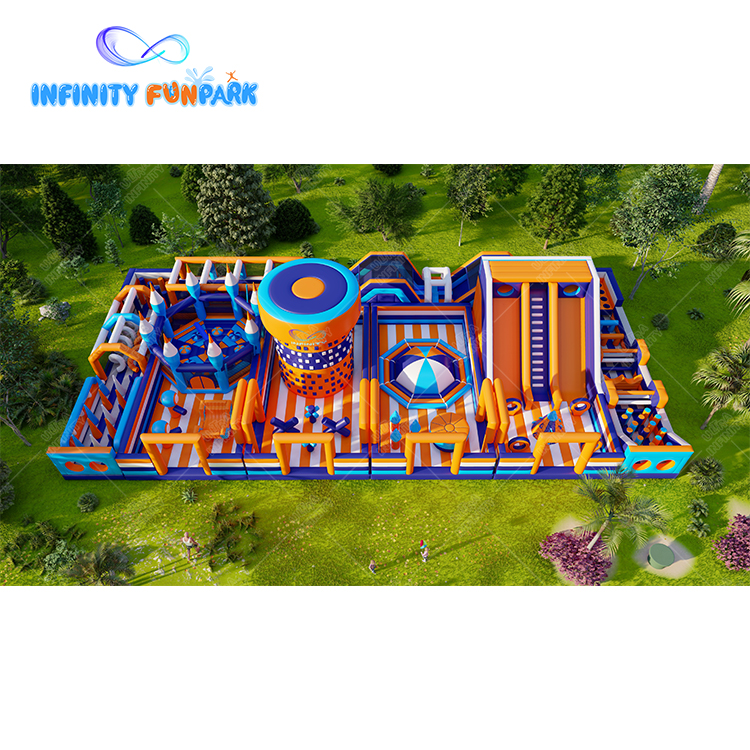
Direct OEM sourcing for commercial inflatable parks allows investors to maximize land utilization, lower procurement costs by 30-45%, and engineer unique modular attractions. This buyer's guide details the 5 essential technical steps for custom inflatable park procurement.
Phase 1
Step 1: Spatial Architecture & Modular Layout Planning
Optimizing land footprint and guest circulation is critical for high-throughput commercial family entertainment centers.
Spatial Efficiency & Traffic Flow Design
- Actionable Insight: Segment your park into perimeter continuous obstacle loops, central high-capacity bounce domes, and dedicated toddler zones to eliminate bottlenecking.
- Business/Consumer Value: Increases maximum concurrent visitor capacity by up to 35%, boosting hourly ticket throughput and reducing queue wait times.
Modular Expansion Engineering
- Actionable Insight: Utilize standardized velcro and heavy-duty zipper connection channels between park modules to enable seasonal reconfiguration and expansion.
- Business/Consumer Value: Protects capital investment by allowing venue operators to refresh layouts or replace high-wear modules without replacing the entire park.
Phase 2
Step 2: Heavy-Duty Material Selection & Structural Safety
Material specifications dictate the lifespan, maintenance costs, and structural integrity of high-traffic commercial inflatables.
0.55mm PVC Tarpaulin & Reinforced Webbings
- Actionable Insight: Specify commercial-grade 0.55mm (18oz) Plato PVC tarpaulin with anti-UV, flame-retardant (BS5852/EN13501), and anti-bacterial coatings for all structural elements.
- Business/Consumer Value: Extends product operational life to 5+ years under heavy commercial usage while reducing tear repairs and maintenance downtime by over 60%.
Quadruple-Stitched Stress Points & Anchor Engineering
- Actionable Insight: Demand double-stitching throughout all seams and quadruple-stitching at high-stress points, reinforced with heavy-duty stainless steel D-ring anchor systems.
- Business/Consumer Value: Ensures strict compliance with EN14960 and ASTM F2374 standards, minimizing liability risk and ensuring maximum operational safety during peak loads.